
The Chinese Communist Party is increasingly adapting its domestic coercive tactics to influence and interfere in foreign democratic countries. Find ASD’s work on the tools China uses—ranging from the weaponization of its economy to Beijing’s attempts to control global and domestic narratives—to interfere in democracies on this page.
Jessica Brandt in Lawfare: Washington Needs a Plan for Pushing Back on Autocratic Advances
Head of Policy and Research Jessica Brandt details the threats these authoritarian states pose and how the Biden administration should respond. The United States and other liberal democracies are engaged in a persistent, asymmetric competition with [...]

Hamilton Toplines: March 15-21, 2021
Following the publication of the U.S. intelligence community’s assessment of foreign interference in the 2020 election, Russian state media last week highlighted predictable backlash and denials from Russian government figures, with a small amount o [...]

Zack Cooper and Lindsey Ford in Texas National Security Review: America’s Alliances After Trump: Lessons from the Summer of ’69
Richard Nixon's 1969 Guam doctrine led America's allies in Asia to pursue a variety of strategies based on perceptions of America's reliability. If the Biden administration wants to strengthen the country's alliances moving forward, and avoid repeat [...]
Messaging Authoritarianism: China’s Four Messaging Pillars and How ‘Wolf Warrior’ Tactics Undermine Them
A messaging strategy is only as good as the goal it serves; as Xi Jinping has made clear, China is seeking to make the world safer for its brand of authoritarianism by reshaping the world order. An analysis of messaging from China’s diplomats, state [...]
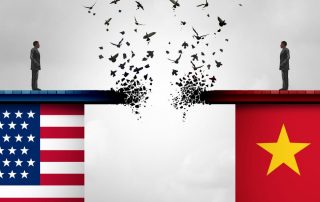
What to Watch: GMF Experts Weigh in as U.S. and China Prepare to Meet in Alaska
Ahead of the first face-to-face meeting between the Biden administration and top Chinese officials, experts from GMF’s Alliance for Securing Democracy and its Asia program are available for context and analysis from various angles. Below please find [...]
Hamilton Toplines: March 8-14, 2021
Prior to President Biden’s address to the nation last Thursday, Russian state media covered speculation and reported concerns about Biden’s lack of press conferences, at times questioning his physical and/or mental health. They also highlighted an i [...]

Lindsay Gorman in Foreign Policy: Pineapple War Shows Taiwan Won’t Be Bullied by Beijing
If democracies are to stand up to Chinese coercion, they will have to join forces, Emerging Technologies Fellow Lindsay Gorman writes in Foreign Policy. This month, China banned imports of Taiwanese pineapples, the latest in a string of punitive t [...]
Zack Cooper in Foreign Affairs: U.S.-Chinese Rivalry Is a Battle Over Values
Great power competition can't be won on interests alone, Co-Director Zack Cooper and Hal Brands argue in Foreign Affairs. On the campaign trail, U.S. President Joe Biden pledged to put values at the heart of his administration’s China policy. Sinc [...]
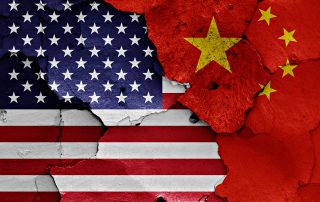
Zack Cooper on the Future of U.S.-China Competition in Foreign Policy
There are two possible outcomes of U.S.-China competition—but Washington should prepare for the more turbulent one, Co-Director Zack Cooper and Hal Brands argue in Foreign Policy. Competition between the United States and China has begun, but how [...]
Bryce Barros on China’s Economic Influence with CEPA
China is reshaping the world’s economy. From infrastructure and investment to manufacturing and supply chain dependency, Chinese economic influence is becoming an increasingly important topic for policymakers in North America and Europe. How should [...]
Hamilton Toplines: March 1-7, 2021
Last week, a prominent theme in Russian messaging around coronavirus vaccines targeted the prospect of Sputnik V’s approval in the EU, with the vaccine’s Twitter account calling for the EU’s European Medicines Agency to review and approve it (the ap [...]

Nad’a Kovalčíková Speaks to Euractiv about How Visegrad Countries Can Combat Coronavirus Disinformation
Russia and China, as well as Iran to a certain extent, have used the coronavirus pandemic as an opportunity to interfere into democratic discourse and to present themselves as internationally responsible actors, while at the same time undermining de [...]